Why Craft Show Vendors Are Being Targeted
Craft shows, artisan markets, and vendor events are wonderful opportunities for small businesses, artists, and makers to connect with customers and share their products. Throughout Ohio, these events bring communities together and support local entrepreneurs.
Unfortunately, scammers sometimes take advantage of vendors who are searching for upcoming events and available booth spaces. Social media has made it easier than ever to discover craft shows, but it has also created opportunities for dishonest individuals to impersonate event organizers.
The good news is that a few simple precautions can help vendors recognize suspicious activity and make more informed decisions before submitting applications or sending booth payments.
How Fake Event Organizer Scams Work
One common scam involves someone pretending to represent a legitimate craft show or vendor event. The event itself may be real, but the person offering booth spaces has no connection to the actual organizer.
For example, a scammer might comment on a Facebook event post claiming that vendor spaces are still available. Interested vendors are then asked to send a private message, complete an unofficial registration form, or submit a booth payment directly to an individual.
In other situations, scammers may create fake event pages, copy promotional graphics from legitimate organizers, or use names that closely resemble established events.
An important distinction: Verifying that an event exists is not the same as verifying that the person collecting vendor fees represents the organizer.
Warning Signs Every Vendor Should Recognize
Not every unusual registration process indicates a scam. Many smaller community events are organized by volunteers, local groups, or individuals who may not have sophisticated websites or registration systems.
However, certain warning signs should encourage vendors to investigate further before sending money.
- Unsolicited private messages: Someone contacts you unexpectedly offering booth space for an event you expressed interest in.
- Pressure to pay immediately: You are told that only one space remains and payment must be sent right away.
- Unverified payment requests: Booth fees are requested through a personal payment account that you cannot confirm belongs to the organizer.
- Inconsistent contact information: The person collecting payments uses contact details that differ from those published by the event.
- Copied event advertisements: Multiple individuals or pages claim to accept registrations for the same event without a clear connection to its organizer.
- Requests to avoid official channels: Someone discourages you from contacting the event organizer directly or using the published registration process.
A single warning sign does not automatically mean an event is fraudulent. The important thing is to take enough time to confirm that you are communicating with the correct person.
How to Verify an Event Before Paying
Before committing to a booth space, take a few minutes to confirm the event details and registration process. These steps can help protect both new and experienced vendors.
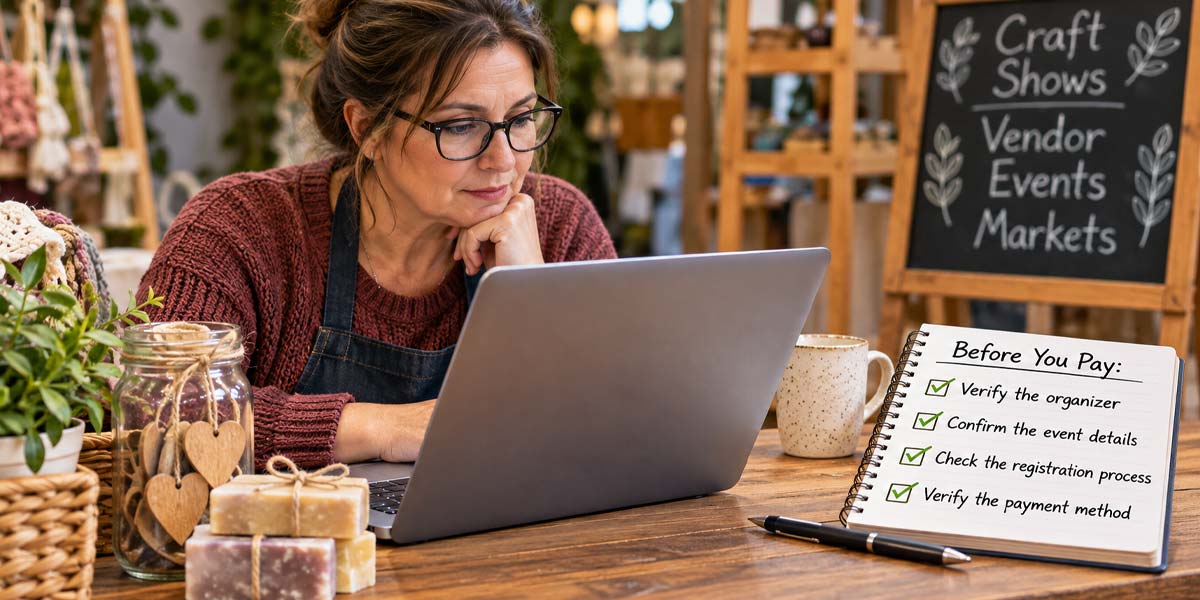
- Find the official event information. Look for an established website, organizer page, community organization, or venue that confirms the event is taking place.
- Contact the organizer independently. Use contact information found through the official website or established event page rather than relying solely on details provided in a private message.
- Confirm the registration process. Ask where vendor applications should be submitted and how legitimate booth payments are collected.
- Verify the payment recipient. Make sure the person or business requesting payment is authorized to collect fees for the event.
- Review the event details. Confirm the date, location, booth fees, vendor requirements, and any applicable cancellation policies.
- Keep records. Save registration confirmations, payment receipts, and communications with the organizer.
Legitimate organizers generally want vendors to feel comfortable with the registration process. Asking questions and confirming details is a reasonable part of preparing for an event.
What to Do If You Suspect a Scam
If something about a vendor registration opportunity seems suspicious, avoid sending payment or sharing additional personal or business information until you can verify the details.
Contact the legitimate event organizer through an independently verified website, phone number, or social media page. If someone is impersonating the organizer, consider reporting the suspicious account or message to the platform where it appeared.
If you have already sent money, contact your bank, credit card company, or payment service as soon as possible to explain the situation and ask about available options. Keep copies of messages, receipts, and other relevant information.
Suspected scams can also be reported to the Ohio Attorney General's Office or the Federal Trade Commission (FTC). Reporting suspicious activity can help authorities identify fraudulent practices and protect other vendors from similar scams.
Sharing a factual warning with the legitimate event organizer can also help them alert other vendors about someone misusing their event name.
Enjoy Craft Shows with Confidence
Ohio is home to countless dedicated event organizers, talented artisans, independent businesses, and community groups that work hard to create enjoyable craft shows and vendor markets.
Most vendors participate in these events to grow their businesses, meet customers, and become part of a supportive local community. Taking a few precautions helps protect those opportunities.
At Ohio Craft Events, we review submitted event listings against publicly available event and organizer information before publishing them. However, vendors should always independently verify registration instructions and payment arrangements with the appropriate organizer.
Whether you are preparing for your first craft show or your one hundredth, a little research can go a long way toward making your next event a positive experience.
Stay informed, ask questions, and continue supporting the wonderful craft show and vendor communities throughout Ohio.